Call us now :08071793879
 Send Inquiry
 Send Inquiry
Silicon based Defoamers
Price 100 INR/ Kilograms
MOQ : 100 Kilograms
Silicon based Defoamers Specification
- Storage
- Dry Place
- Boiling point
- 100 Degress Celcius
- Ph Level
- 6.0-8.0
- Smell
- Pungent
- Melting Point
- 0C (32F) Water
- Density
- <1.0 water Milligram per cubic meter (mg/m3)
- HS Code
- 38249900
- Form
- Liquid
- Solubility
- Soluble
- Other Names
- Defoamer Emulsion
- Purity
- 20%
- Taste
- Odorless
- Classification
- Other
- Chemical Name
- Silicone Base Defoamer
- Grade
- Industrial Grade
- Standard
- Industrial
- Type
- Non-Hazardous
- Usage
- Typical dosage range is between 5 and 10 g/L More precisely it is 5 to 7 g/L of 10% product. Foam problem areas vary from factory to factory and from time to time in the same factory. If you know where the severe foam problems exist in the process, you can feed heavier dosages at this points and lesser dosages in the other areas where foam is not as much of a problem, and still maintain acceptable technical and cost performance.
- Main Material
- Silicone Base Defoamer
- Application
- Industrial, Paper, Water Treatment
Silicon based Defoamers Trade Information
- Minimum Order Quantity
- 100 Kilograms
- FOB Port
- JNPT and Mundra
- Payment Terms
- Cash Advance (CA)
- Supply Ability
- 10000 Kilograms Per Month
- Delivery Time
- 5 Days
- Sample Available
- Yes
- Sample Policy
- Free samples are available
- Packaging Details
- 50 kg and 200 kg drum
- Main Export Market(s)
- Middle East, Africa
- Main Domestic Market
- All India
- Certifications
- ISO,Food and Drug License
About Silicon based Defoamers
To control foaming in various industrialapplications is a main function of OLKLIN-DF.
Contents of the OLKLIN- DF:
OLKLlN- DF: Combination of silicone oils andsuitable emulsifier.
OLKLlN- DF, an anti-foaming agent, is usefulin eliminating various kinds of troubles causedby foaming in processes of a variety ofindustries handling surfactants, water-solublehigh-molecular compounds, or the like arehandled, such as, for example, the fiberindustry, dyeing industry, paper and pulpindustry, synthetic resin industry, dye industry, and oil field / refinery industry in order toprevent various troubles caused by foaming.
Efficient Foam Control for Industrial Needs
Silicon based defoamers offer robust foam suppression, making them ideal for challenging industrial processes such as in the paper industry and water treatment facilities. Their quick action and consistent quality help maintain operational stability, reduce downtime, and improve process results across a broad spectrum of industrial applications.
Easy Application with Flexible Dosage
This defoamer can be tailored to your plants unique requirements by varying the dosage, typically ranging between 5 and 7 g/L of a 10% solution. For severe foam problem areas, the dosage may be adjusted accordingly, ensuring both efficient performance and cost-effectiveness, regardless of fluctuating foam levels in different parts of the facility.
Safe and Stable for Industrial Environments
Engineered for safety, this non-hazardous silicone-based emulsion meets industrial standards for purity and stability. With a neutral pH and low toxicity, it is safe to handle and store, making it a dependable solution for manufacturers seeking both compliance and efficiency in their operational processes.
FAQs of Silicon based Defoamers:
Q: How do I use Silicon Based Defoamer in industrial applications?
A: To use this defoamer, add it directly to areas where foam occurs. The typical dosage is 5 to 7 grams per liter of a 10% solution, but you can increase the dosage at severe foam hotspots and reduce it in less affected zones for optimum results.Q: What are the primary benefits of using this silicone-based defoamer?
A: Its main advantages include rapid foam reduction, inertness in most industrial environments, adaptability to various processes, and cost-effective performance. It helps to maintain process efficiency by preventing foam-related disruptions.Q: When should I apply the defoamer during the process?
A: It is best applied when foam starts forming in the process. Identify the stages or areas with persistent foam and add the defoamer accordingly. Regular monitoring will help in adjusting frequency and quantity for best results.Q: Where should the silicone defoamer be stored?
A: Store the defoamer in a dry place, away from direct sunlight and moisture. Proper storage extends shelf life and preserves its effectiveness for industrial use.Q: What is the process for optimizing defoamer dosage for different foam problem areas?
A: Begin by identifying sections of your production line with heavy foam formation and dose the product more heavily there. Use lower dosages in other areas. This flexible dosing ensures both technical efficacy and cost savings.Q: Is the silicone-based defoamer safe to handle and non-hazardous?
A: Yes, it is formulated as a non-hazardous, industrial-grade product. It has a neutral pH (6.08.0) and is safe for use when handled as directed. Always follow standard industrial handling guidelines.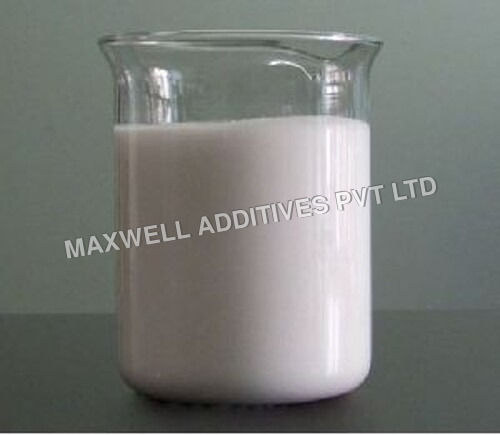
Tell us about your requirement

Price:
Quantity
Select Unit
- 50
- 100
- 200
- 250
- 500
- 1000+
Additional detail
Mobile number
Email

More Products in Oil and Gas Drilling Chemicals Category
Bactericide / Biocide
Price 120 INR / Kilograms
Minimum Order Quantity : 100 Kilograms
Purity : 3050%
Form : Liquid
Grade : Industrial Grade
Storage : Dry Place

Corrosion Inhibitors for Hydro Testing
Price 125 INR / Kilograms
Minimum Order Quantity : 500 Kilograms
Purity : 3050%
Form : Liquid
Grade : Industrial Grade
Storage : Dry Place
OLKLIN-VES (Visco Elastic Surfactant)
Price 130 INR / Kilograms
Minimum Order Quantity : 1000 Kilograms
Purity : High
Form : Liquid
Grade : Industrial Grade
Storage : Room Temperature

OLKLIN GLCI (Gas Line Corrosion Inhibitor)
Price 150 INR / Kilograms
Minimum Order Quantity : 200 Kilograms
Purity : High
Form : Liquid
Grade : Industrial Grade
Storage : Room Temperature

 Send Inquiry

Our Products
- Benzalkonium Chloride
- Water Treatment Chemicals
- Oil and Gas Drilling Chemicals
- Sugar Processing Chemicals
- Polymers
- ETP Chemicals
- Water Treatment Biocides
- Polyelectrolyte
- Cleaning And Sanitizing Chemicals
- Organophosphonates
- Defoamer Chemical
- Polymer Chemical
- Pine Disinfectants
- Corrosion Inhibitors
- Acid Corrosion Inhibitor


Plot No. E-94, Sardar Estate, Road No 2, Vadodara - 390019, Gujarat, India

Mr Nachiket Shah
(Manager)
Mobile :08071793879
 Send Inquiry
 Send SMS
 Call Me Free
Developed and Managed by Infocom Network Private Limited.


